About the Cohort

Demographics

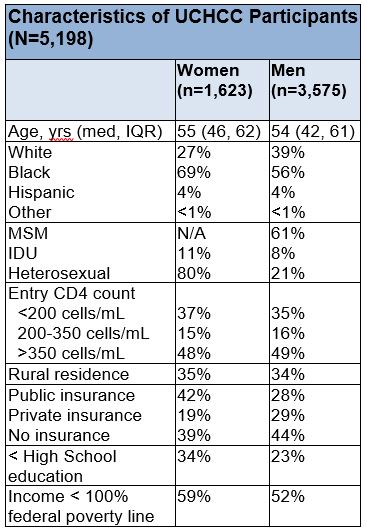
To date the cohort includes over 5,700 patients who have received primary HIV care at UNC from 1996 to the present, representing over 10% of persons with HIV in North Carolina. This represents over 90,000 person-years of observation since 1996. Participants come from all 100 North Carolina counties, especially those with the highest prevalence rates of HIV. Overall, 30% are women and 60% are African American.

37% percent of the cohort lives in rural areas, and patients travel an average of 56 miles one-way to clinic. Over a quarter of patients have not finished high school, and over one-half live under the federal poverty line. The cohort is distinctive among large clinical cohorts in the US as its demographic profile represents the growing HIV epidemic in the southeastern US.

Patients are presented with a tiered consent that allows them to participate in one or more levels, starting with contribution of their data, storage of existing and / or excess samples, collection of Patient Reported Outcomes and/or willingness to be contacted for study participation. Greater than 95% of patients provide full consent.
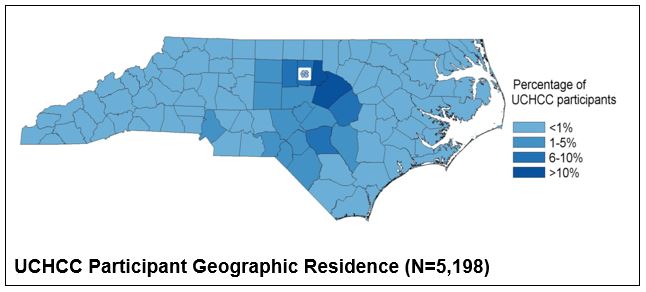
Map displaying geographic residence of cohort participants


HIV and Clinical Characteristics

HIV Outcomes

Upon entry into care, 36% of UCHCC participants had CD4 counts less than 200, 16% between 200-350, and nearly half greater than 350 cells/mL. The median nadir CD4 count is 193 with an IQR of 43-396. Currently, over three-quarters of participants have CD4 cell counts greater than 350, 13% between 200-350, and 10% less 200. Over 90% of participants have undetectable HIV RNA.


Comorbidities

Assessing clinical comorbidities is becoming increasingly important in HIV research, especially among aging people living with HIV. Among UCHCC participants, 40% have had a prior AIDS-defining condition, 40% have hypertension, one-third have liver disease, 31% have cardiovascular disease, over one-quarter have renal disease, and 12% have diabetes.


Patient-Reported Outcomes

Substance Use and Mental Health

Among UCHCC participants, more than one-third have never smoked tobacco, over a quarter are former smokers, and 38% are current smokers. Nearly a quarter do not currently use alcohol, one-half have non-hazardous use, and over a quarter have hazardous use. 21% of participants have no history of substance use, 29% have a history of substance use, and half currently engage in substance use.

Notably, over half of UCHCC participants report depressive symptoms, and over a quarter report anxiety symptoms.


Other Outcomes

Among UCHCC participants, 13% are considered frail, 44% prefrail, and 43% not frail. Social stressors are prevalent, with nearly a quarter reporting a need for housing assistance and over one-third for food assistance. 10% report intimate partner violence, 29% experience stigma, 15% report low social support, 21% medium social support, and a nearly two-thirds report high social support. Symptom burden is also high, with 56% reporting fatigue, 50% insomnia, 46% pain, 46% sadness, and 45% anxiety.